
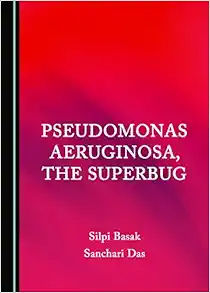

By Silpi Basak, Sanchari Das
Pseudomonas aeruginosa is one of the most commonly isolated bacterial species in clinical microbiology laboratories and it causes infections in hospitalized patients with strains resistant to many antimicrobials. In addition, it can form a biofilm especially in cystic fibrosis patients and patients with medical devices. Extracellular polymeric substances (EPS) or extracellular matrixes in biofilm prevent access of antimicrobial agents, disinfectants, and host-produced immune responses. Antimicrobial resistance in Pseudomonas aeruginosa is multifactorial and can be due to mutation, transfer of genes by plasmids, or transposons, among other causes. Production of β-lactamases causes resistance to β-lactam drugs including Carbapenems. Against this background of emergence of antibiotic resistance, this book studies different types of β-lactamases routinely produced by Pseudomonas aeruginosa strains in clinical microbiology laboratories. It shows that, although molecular methods like Polymerase Chain Reaction (PCR) are the gold standard for detection of different types of β-lactamases, they are very costly and require expertise.
Product Details
- Publisher : Cambridge Scholars Publishing; 1st edition (July 20, 2022)
- Language : English
- Hardcover : 130 pages
- ISBN-10 : 1527584135
- ISBN-13 : 978-1527584136
Be the first to review “Pseudomonas aeruginosa, the Superbug (Original PDF from Publisher)”
Related products

Infectious Diseases
Chlamydia Infections: Clinical, Laboratory and Pathological Aspects (Original PDF from Publisher)
*HOT books
Jawetz, Melnick & Adelberg’s Medical Microbiology Twenty-Ninth Edition, 29th Edition (EPUB)
Infectious Diseases
Pediatric Collections: Antimicrobial Stewardship (Original PDF from Publisher)
Infectious Diseases
Infectious Diseases

Infectious Diseases
Reviews
There are no reviews yet.